Cebrail 6, 1790 — In the Gaotu Empire’s Miyako, Astrologer Satoru Kirijima has reignited a long-simmering debate: do the stars that shape a mage’s magical path also bind their destiny? As society leans heavily on the Official Horoscope, questions of free will, social mobility, and discrimination have come to the forefront of Kenomitian discourse.
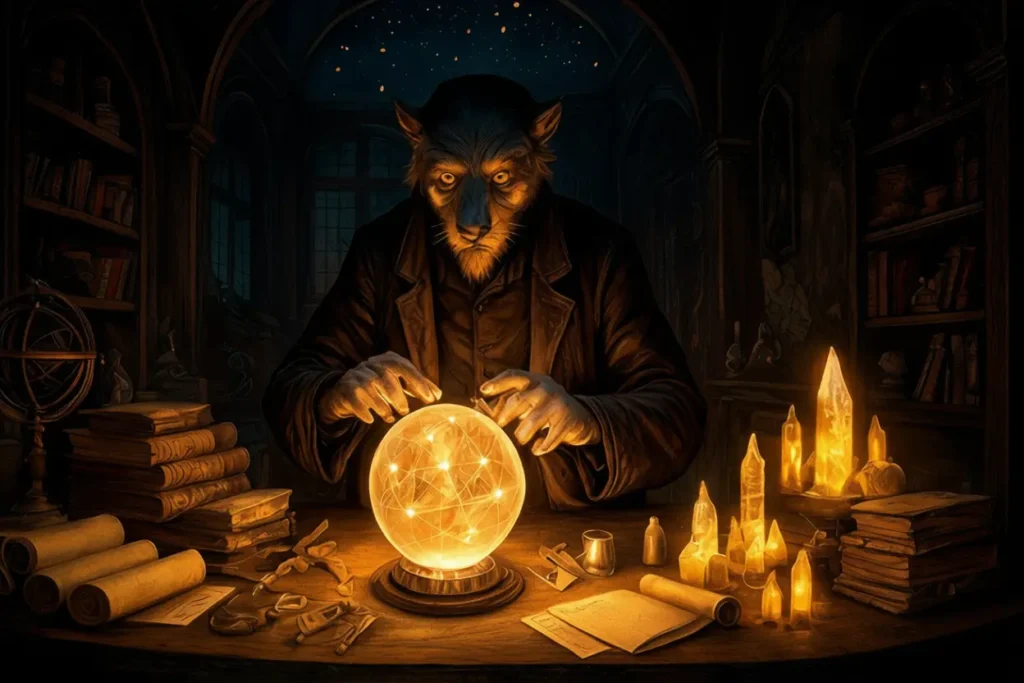
A lone Astrologer Satoru Kirijima reignites the debate over whether the stars truly bind a mage’s fate (Credit: Kenomitian)
Context
The Imperial Astrologers’ Guild of Miyako convened to release updated guidance on the application of the Official Horoscope. The document, meant to help guilds and academies determine talent pipelines, immediately sparked controversy for reaffirming the deterministic link between birth stars and magical power.
The Horoscope traces back to Abraxas, the Aetheric Demiurge, who inscribed thirteen constellations into the heavens to gift the Theria with distinct Kochos hanefesh — “Ways of Magic.” Combined with the lunar-born Pardes levels, these signs outline not just an individual’s magical discipline but also their maximum potential. Critics argue the system enforces destiny at birth, narrowing life opportunities and reinforcing hierarchies.
Development of the Facts. Star Signs as Magical Blueprint
Every mage in Kenoma is born beneath one of thirteen star signs, each aligned with a magical discipline. Synesis of Cetus grants Logomancy, while Syncrasis of Lepus imbues Pyromancy, and Mixis of Vulpecula bestows Mesmerism. From Gastromancers of Hedone to Necromancers of Theletus, the Horoscope dictates a mage’s elemental affinity before they utter their first spell.
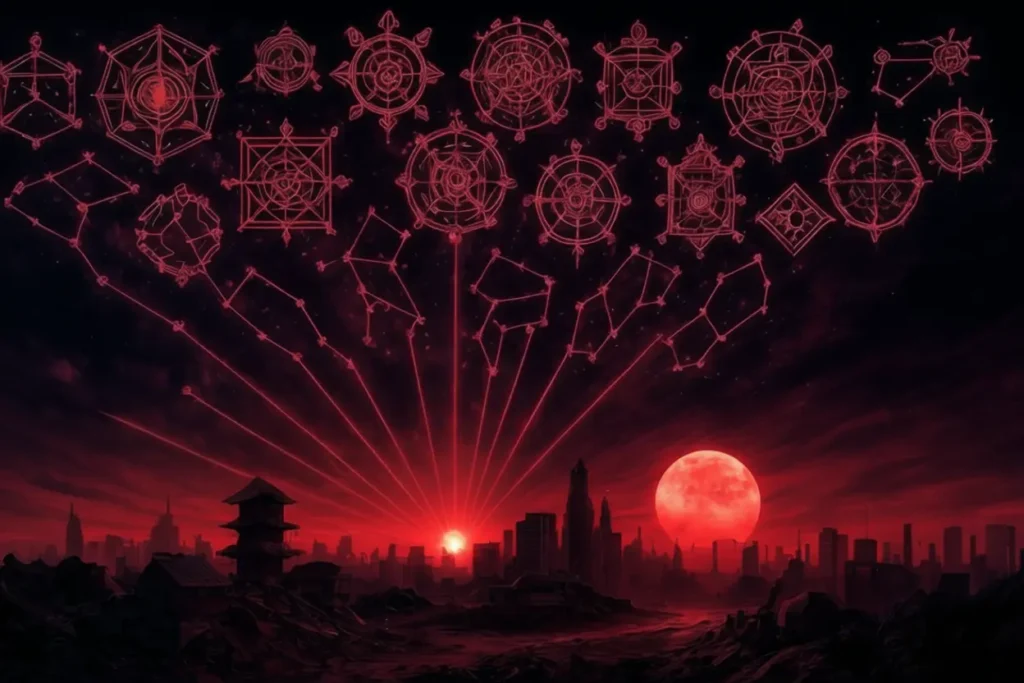
The thirteen constellations of Kenoma, each a magical blueprint for every mage, trace a path of pre-ordained power (Credit: Kenomitian)
Kenomitian Star Signs: Watch Video on Youtube
Pardes levels compound the matter. A mage born under eclipses achieves the rare Partzufim — full Archmagic potential — while those born in crescent phases languish within the humble Peshat range. Official statistics place 40% of the population in Peshat, with only 1% reaching Partzufim. To many, this distribution resembles a caste system written in the sky.
“It’s not simply divination — it is identity,” Kirijima explained in Miyako. “From birth, a mage carries the stamp of their constellation. To deny it is to deny Abraxas’s order. But to accept it blindly is to chain oneself to the heavens.”
Voices of Constraint and Empowerment
Interviews across Miyako reveal the deep psychological weight of astrological determinism.
A young Peshat-born Gastromancer described her struggle: “My star makes me the Maw. Everyone expects me to be a devourer, a feeder of others. At Scholomance [1], I wasn’t even considered for elite study. It felt like the sky had already chosen my ceiling.”

A young Gastromancer, defined by her “Maw” star sign, faces social and institutional isolation at the elite Scholomance (Credit: Kenomitian)
Yet others find empowerment. A Sod-born Pyromancer from the Lepus sign celebrated his trajectory: “The stars gave me fire, and fire gave me command. Without that alignment, I would not stand as a captain in the Emperor’s Guard. I thank the heavens for my path.”
Such contrasts highlight the Horoscope’s dual nature: destiny as burden for some, gift for others.
Astrologers and Thaumaturgists Shape Society
Astrologers like Kirijima serve not only as interpreters of the stars but also as career consultants, guiding families on what paths to encourage for their children. Thaumaturgists reinforce this framework by tying ritual practices and spellcasting instruction to one’s sign. Together, they maintain a self-perpetuating structure of expectation.
“When society treats the Horoscope as truth, people grow into their signs,” said Kirijima. “It is not only the heavens but belief itself that molds them.” This reflects what Alienists call looping effects — prophecies becoming real through behavioral reinforcement.
Education and Stratification
The Horoscope dictates entry to the Scholomance, the empire’s elite academy. Only Sod and Partzufim candidates — alongside certain favored Nephilim — are admitted at age twelve. This policy ensures that magical aristocracy reproduces itself across generations. Peshat-born children, however gifted, find the gates barred.
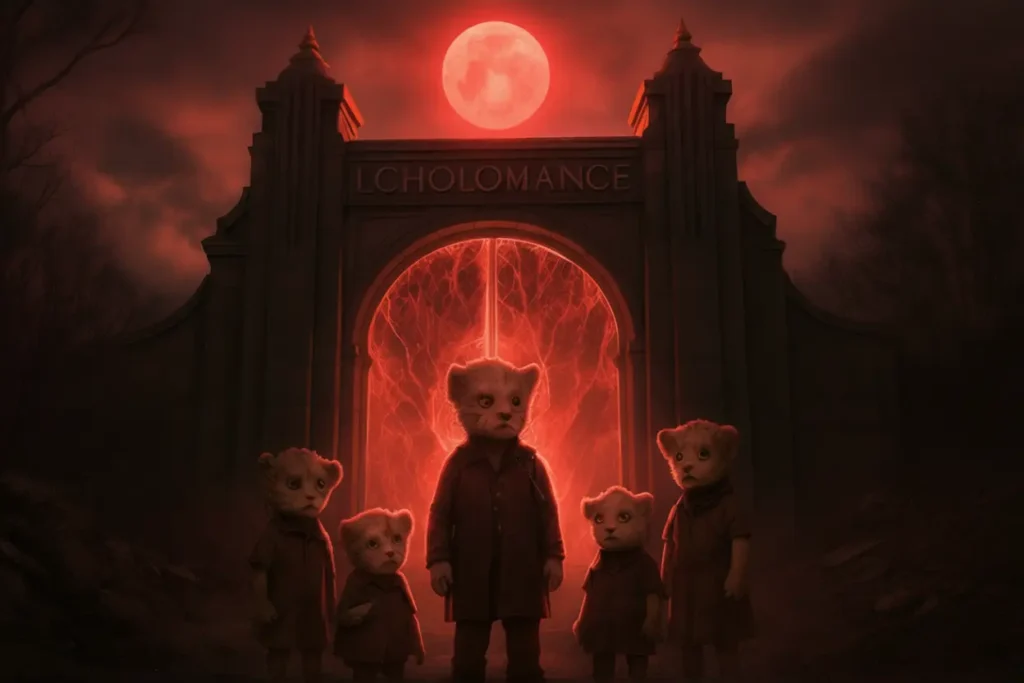
The gates of the Scholomance, barred to all but the magically elite, ensure that magical aristocracy reproduces itself (Credit: Kenomitian)
The numbers tell the story: nearly every Archmage serving the Emperor hails from the higher Pardes tiers. Meanwhile, Peshat families are left with trades in alchemy, ward-crafting, or labor, rarely rising to positions of power.
Critics draw parallels to feudal hierarchies: “The Horoscope masquerades as cosmic truth,” one dissident guild scholar observed, “but it functions as a birthright system. It divides us not by will or merit, but by lunar accident.”
The Debate of Destiny vs. Free Will: Philosophical Dissonance
The determinism-versus-agency debate resonates deeply in Kenomitian society. Can an individual’s effort overcome the heavens’ decree? The painful process of seder hishtalshelus offers one answer. Through thirteen arduous initiations, a mage can evolve to higher Pardes levels, though the training may take decades and risks bodily collapse.
This possibility complicates the deterministic narrative. While destiny sets the baseline, choice and perseverance may alter the trajectory. But only a fraction of mages possess the means or endurance to attempt it, leaving the majority trapped within the roles assigned at birth.
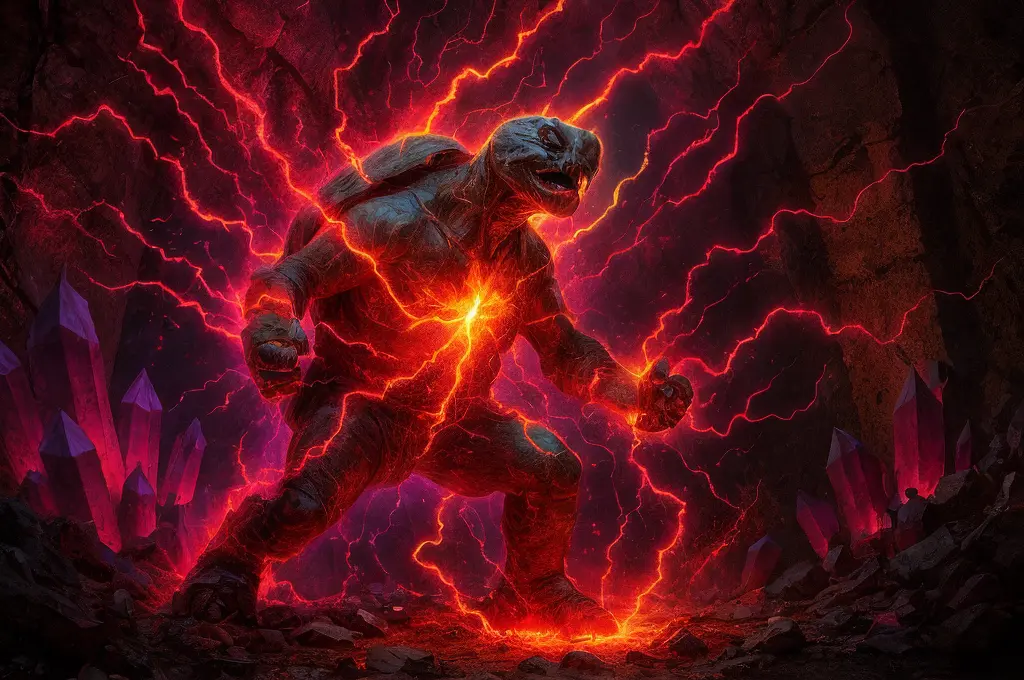
Through arduous, life-threatening initiations, a select few mages can evolve beyond the destiny set by their birth stars (Credit: Kenomitian)
Real-World Echoes
Observers compare the Horoscope system to earthly debates about genetics, social stratification, and educational gatekeeping. Just as perceptions of innate talent often determine schooling and career paths, so too does Kenoma’s astrological determinism risk hardening inequality. Critics warn it reinforces fatalism, undermining innovation and personal growth.
“When you tell a child they are destined for mediocrity, they rarely rise beyond it,” Kirijima said. “Astrology is powerful because we believe it is powerful. Its chains are as real as we make them.”
Discrimination and Enforcement
The Horoscope has also been weaponized in law. In some Gaotu provinces, Nephilim of the Black Sun are executed at birth, their eclipse-born signs deemed too dangerous. In Glycon, commoner Archmages can be enslaved through magical conditioning, justified by their “natural destiny.” These practices tie back to astrological determinism, legitimizing oppression under the guise of cosmic order.
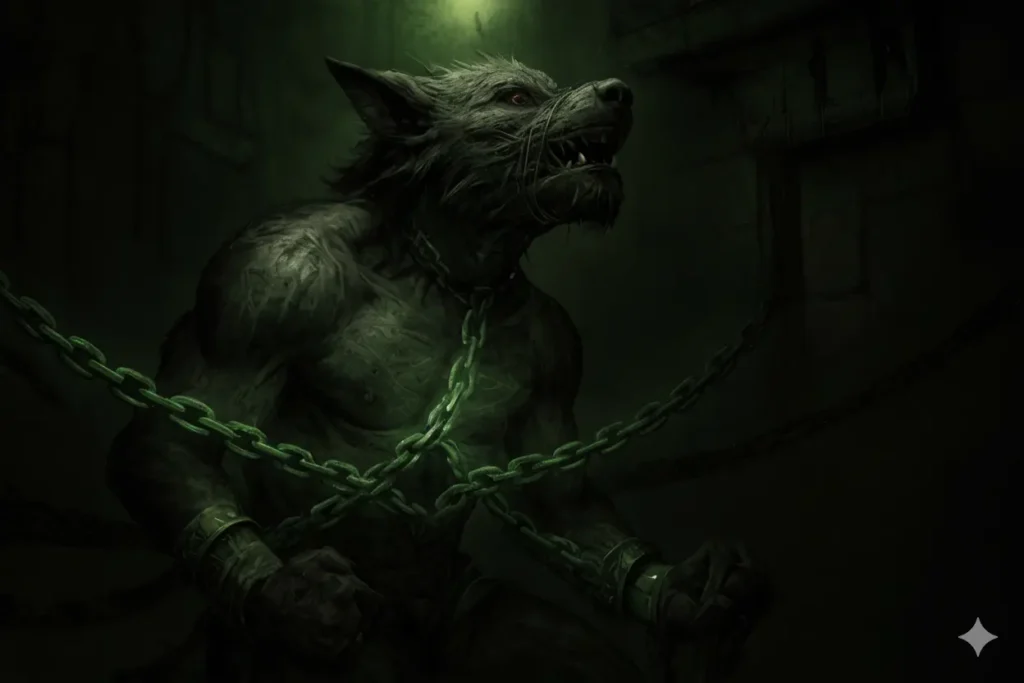
In the most sinister displays of astrological determinism, commoner Archmages are enslaved through magical conditioning justified by their “natural destiny.” (Credit: Kenomitian)
The Role of Star Signs in Daily Life
In Miyako, markets bustle with Horoscope paraphernalia: charms for Pyromancers of Lepus, divining scrolls for Necromancers of Theletus, and enchanted trinkets for those of the Forge. Even mundane interactions are colored by star-born expectations. Employers hire according to sign; marriages are arranged for compatibility; guilds accept apprentices based on alignment.
“Astrology is the empire’s invisible bureaucracy,” said one Thaumaturgist. “It allocates people before they can speak.”
Toward an Uncertain Future
The Horoscope endures because it is deeply woven into Kenomitian culture, its authority sanctified by tradition and reinforced by faith. Yet voices like Satoru Kirijima’s question whether destiny must dictate every life. Calls for reform range from broadening Scholomance admission to banning Horoscope-based hiring practices.
Still, resistance is strong. To question the stars is to question Abraxas himself. For many in the Gaotu Empire, such doubt borders on heresy.
As the night sky continues to shine with thirteen constellations, Kenoma must wrestle with a paradox: do the stars reveal who we are, or do they make us so?
For now, Miyako lives suspended between reverence and doubt — its people watching the heavens, uncertain whether they gaze upon guides of fate or mirrors of their own belief.
Notes extracted from the Kenomitian Compendium
[1] Scholomance: the greatest academic institution in Kenoma, staffed by Supernal Avatars. It operates as an exclusive middle-high school, mixing pedagogy and thaumaturgy, and it has campuses all over the world and beyond.
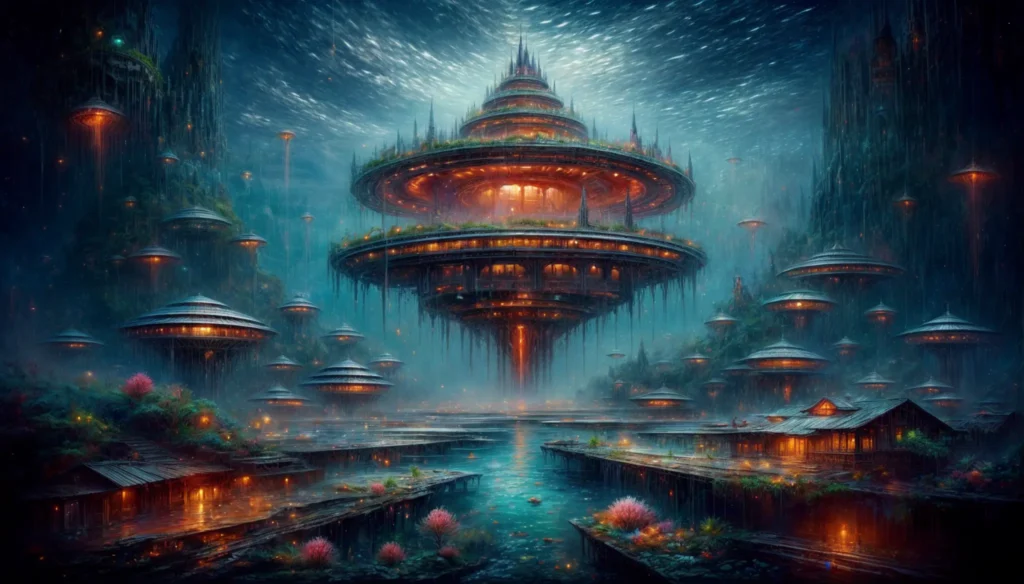
A glimpse into the Qimranut, the Modern Institute of Science and-Technomagic, one of the Faculties of Sholomance. Located on an underwater colony on Atlantis’ oceanic holdings, with Bio Punk and Iaoi architecture. Its Principal is Solomon III (Credit: Kenomitian).