Uriel 8, 1790 – In the heart of Los, the capital of the Oothoonian Union [1], we meet Jenna Glass—a Partzufim-level psychomancer whose work sits at the contentious intersection of magical innovation, social necessity, and existential ethics. In this rare interview, Glass discusses the science, philosophy, and unintended consequences of “epimorphing” and “rewriting” minds, particularly in clones and uplifted Tlavati [2].
Q: For readers unfamiliar with your work, what exactly is epimorphism, and how does it differ from rewriting?
A: Epimorphism is a deep-structure psychomantic transformation—changing the mind, personality, even the desires of a living being or automaton. It can be subtle, like easing trauma, or absolute, creating an entirely new identity. Rewriting is a more applied form, often used on mentally preprogrammed clones or uplifted Tlavati to halt their degeneration into savagery. Technically, rewriting is epimorphism done for maintenance, rather than creation.
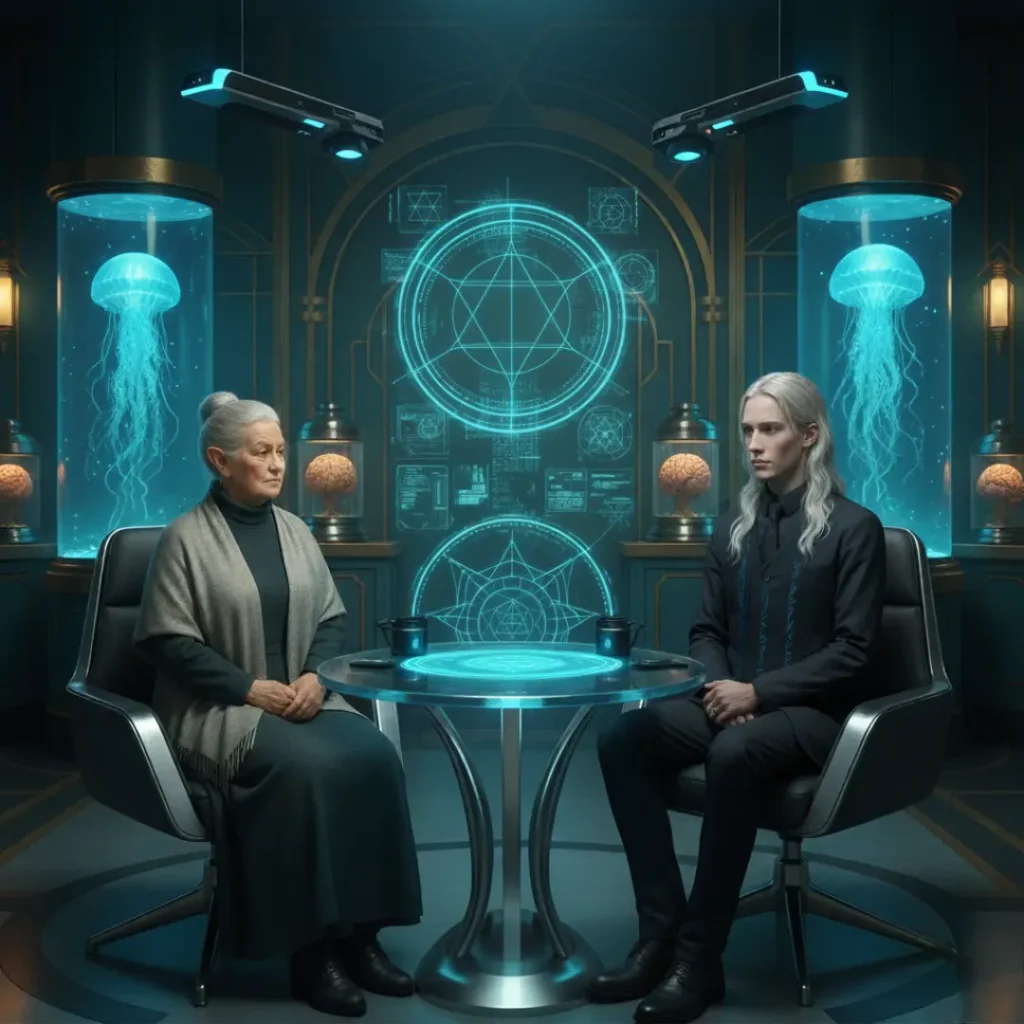
Reporter George Crowley interviews epimorphist Jenna Glass
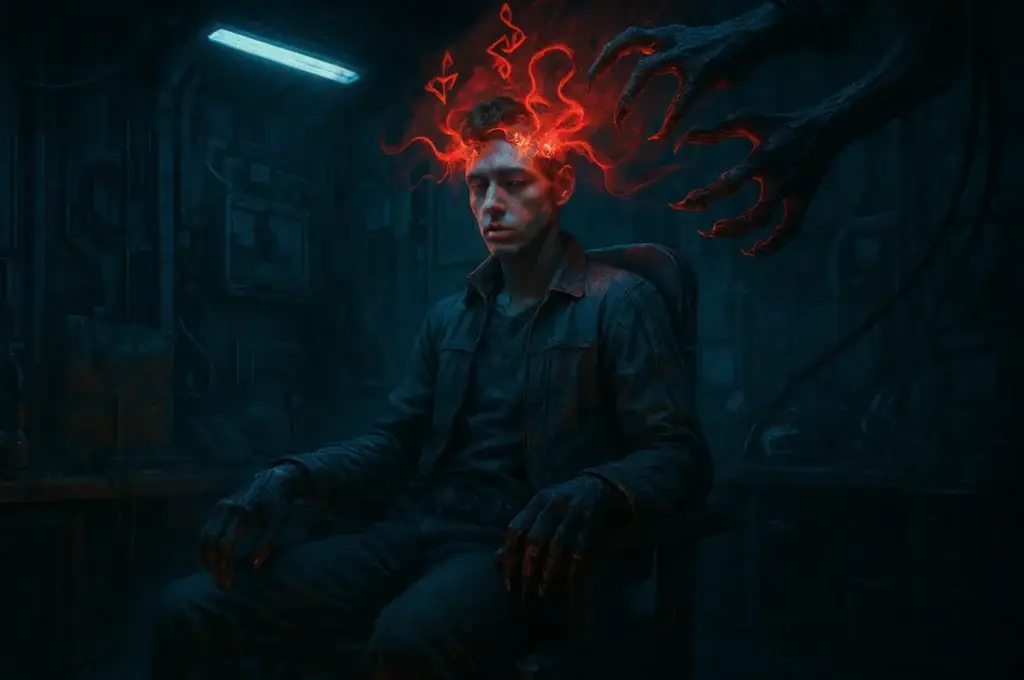
Epimorphism is a deep-structure psychomantic transformation—changing the mind, personality, even the desires of a living being or automaton (Credit: Kenomitian)
Q: You say “degeneration into savagery.” Why does that happen?
A: It’s part biology, part metaphysics. Clones and uplifted Tlavati are constructed with minds that are… incomplete. Without periodic psychomantic reinforcement, neural pathways collapse, their True Will destabilizes, and the soul’s tether frays. Left long enough, you get regression—loss of speech, empathy, self-awareness. In societies like ours, that’s both a humanitarian and security concern.
Q: Your critics argue that you are effectively reprogramming people, not healing them.
A: That’s fair, and I don’t dismiss it. When you rewrite someone, you decide what stays, what goes, and what’s new. That’s power. I try to keep the original True Will intact where I can—but “intact” is a philosophical word. Sometimes, to keep someone alive and functional, you have to overwrite parts of them. It’s not clean work.
Q: How does Da’as Elyon perceive an epimorphed mind?
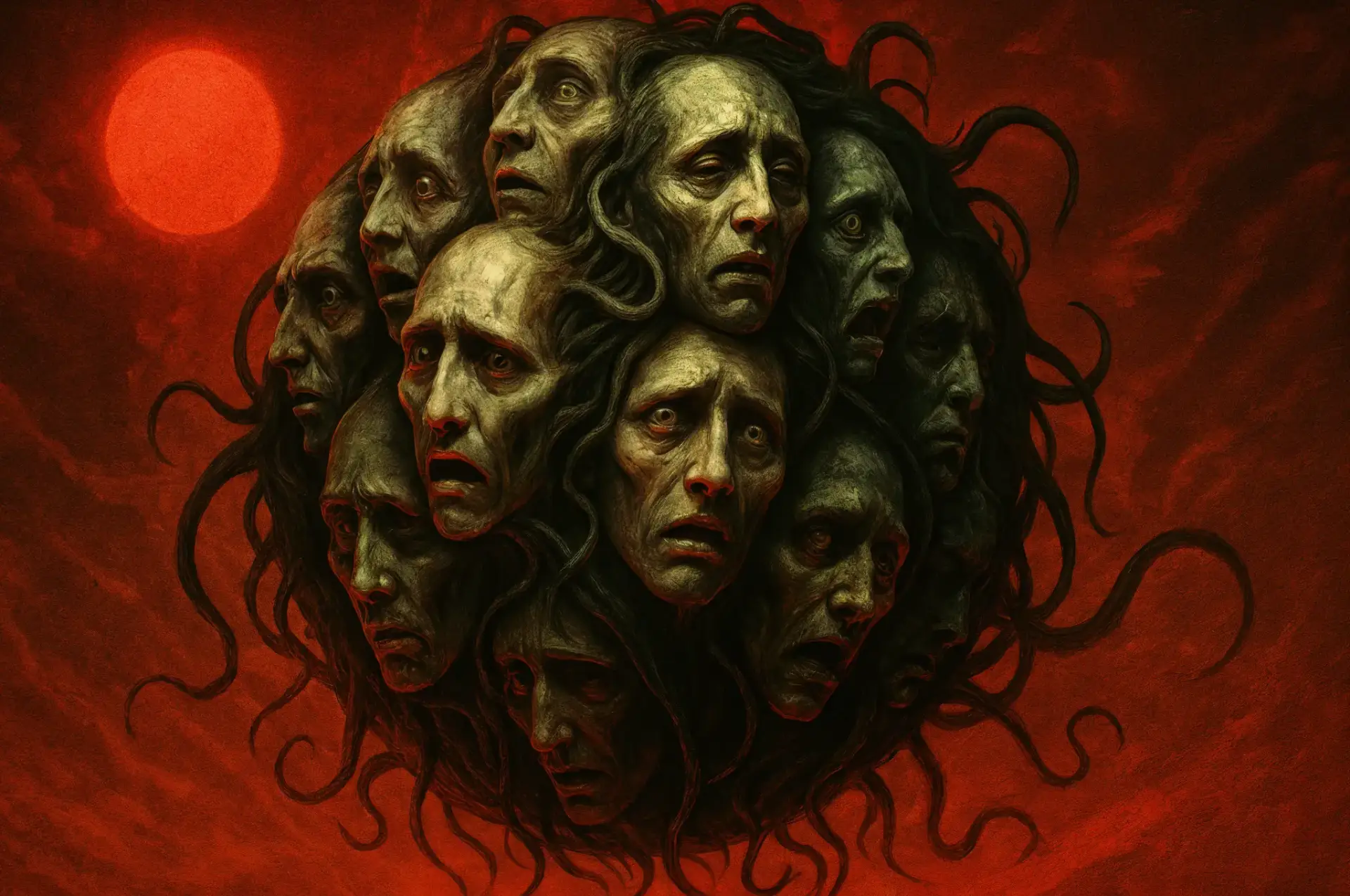
A: Like a sphere made of chitinous faces and tentacles—each face is a self the being has worn. With each rewrite, the sphere grows more complex. It’s a reminder that identity isn’t erased; it’s layered.
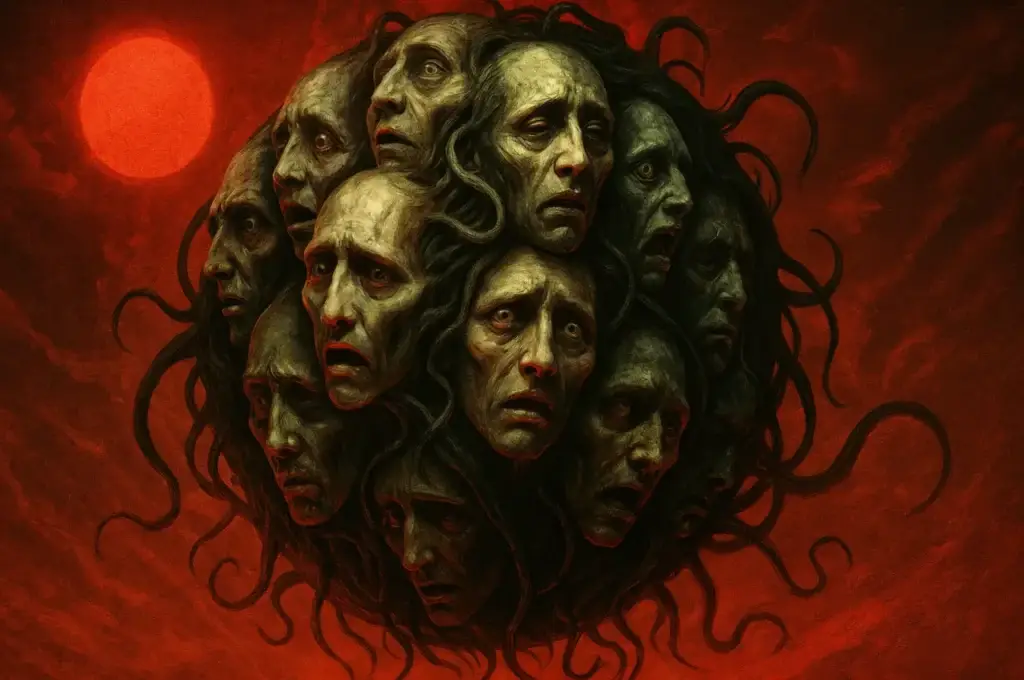
Da’as Elyon perceives an epimorphed mind as a sphere made of chitinous faces and tentacles—each face a self the being has worn (Credit: Kenomitian)
Q: Let’s talk about Wights and Ghasts—so-called “pseudo-ghosts”.
A: These are the dark consequence no one likes to talk about. Wights [3] are the discarded minds of an epimorph—each one, a ghost of who they were. Ghasts [4] are the same, but for non-elioud creations like golems and familiars. If the creator dies under certain conditions, those minds don’t dissolve into Tohu. They linger, doomed to oblivion or strange, timeless prisons like Kalyptos or Abezethibou. I’ve met my own Wights. It’s… not an easy conversation.
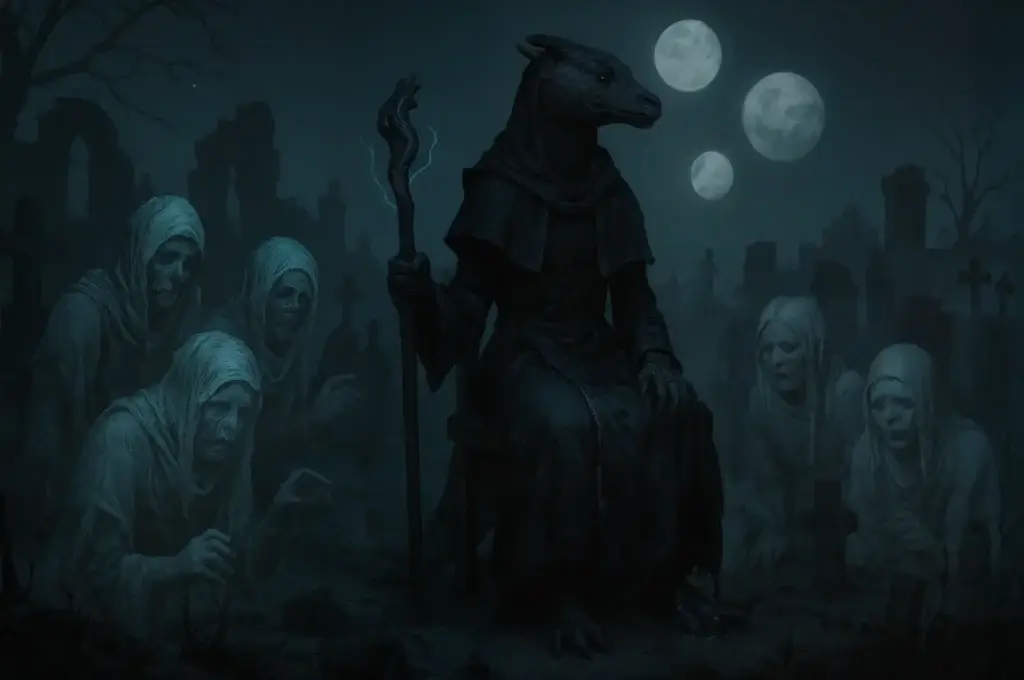
Wights are the discarded minds of an epimorph—each one, a ghost of who they were (Credit: Kenomitian)
Q: Is their creation inevitable?
A: Not inevitable, but likely if you epimorph often. Every rewrite risks fragmenting the soul. Necromancers can mitigate it, but the line between preservation and multiplication is thin.
Q: Some states use epimorphism for political control—the Harmonium of Astaphanos comes to mind.
A: Astaphanos is… a special case. The entire country is in a constant state of rewrite. Leadership, citizenry, even cultural memory are reshaped every cycle, fueled by Orgone harvested from the misery those glimpses of old lives cause. I call it a “malady.” It keeps the machine running, but at what cost?
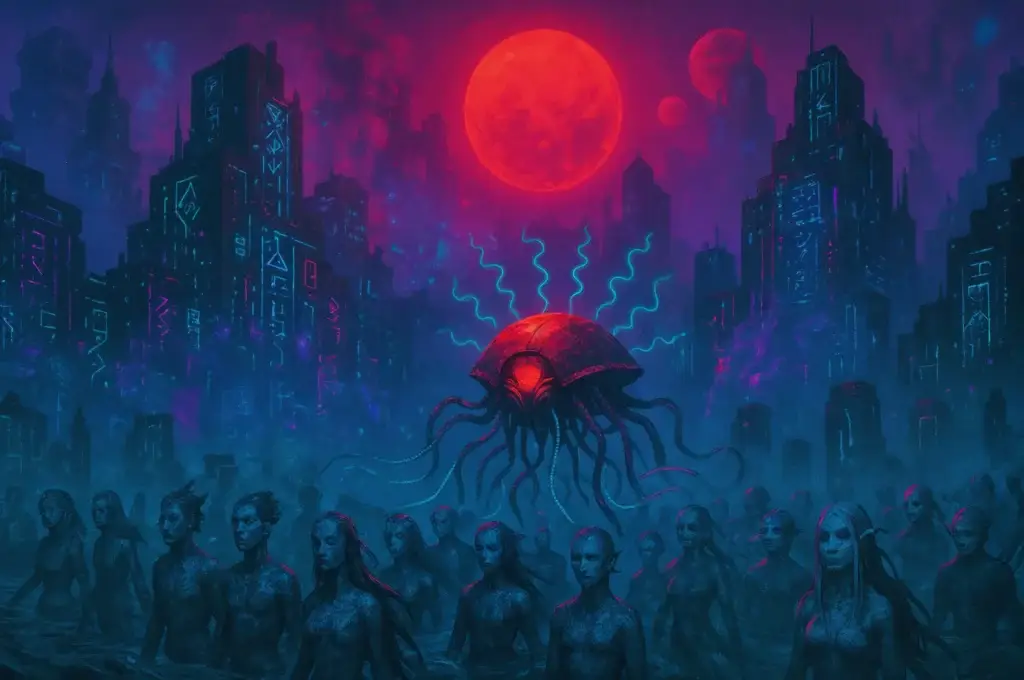
In Astaphanos, the entire country is in a constant state of rewrite, fueled by Orgone harvested from the misery those glimpses of old lives cause (Credit: Kenomitian)
Q: What about legal limitations here in the Oothoonian Union?
A: We permit epimorphism only for clone slaves and under strict oversight. That’s controversial in itself. But compared to nations like Ikisat, which use it as punishment, or the Technocracy of Paraplex, which couples it with chemical control, we’re considered… restrained.
Q: How do your rewritten subjects view you?
A: Depends on the rewrite. Some thank me. Some avoid me. A few… remember fragments, enough to resent me. And there are advocates—former rewrites who believe the intervention saved them. They speak at Council meetings. They keep me honest.
Q: Is there a Mana cost barrier to this work?
A: Absolutely. The deeper the change, the more Mana you burn. Partzufim can sustain the process without collapse, but even for us, it’s draining. Too much, and you risk psychomantic inversion—casting the opposite of your intent without meaning to.
Beyond the Written Words, the Story Unfolds
Q: Could epimorphism be done in a consensual, transparent way?
A: Yes, but it requires informed consent in the truest sense—understanding that you may never be the same person again. That’s a hard truth for most. Identity feels permanent until you see it on the table.
Q: Do you see parallels to neuroplasticity and identity formation?
A: Definitely. The brain can be rewired through thought, experience, habit. Epimorphism is that principle, but magnified, accelerated, and made dangerous. The ethics are similar: just because you can change someone doesn’t mean you should.
Q: What’s your stance on using epimorphism for enhancement, not repair?
A: Enhancements are the slipperiest slope. It’s one thing to stabilize a mind; it’s another to sculpt it into an ideal for military service, corporate branding, or leadership charisma. That’s where personhood starts to bend into utility.
Q: Is personhood preserved after repeated rewriting?
A: That’s the question at the heart of all this. I think so—personhood is a property of the soul, not just the mind. But if you chip away at memory, will, and desire long enough, you may not have the same person. You might have someone new.
Q: What about the risk of Orgone addiction?
A: It’s real. Especially in clones and uplifted Tlavati. The rewriting process can hook the soul into craving the energetic feedback loop of change itself. That’s something I actively monitor and treat.
Q: Do you ever regret your work?A: I regret my mistakes. I regret the Wights I didn’t save. But the people I’ve kept from losing themselves entirely—that keeps me going.
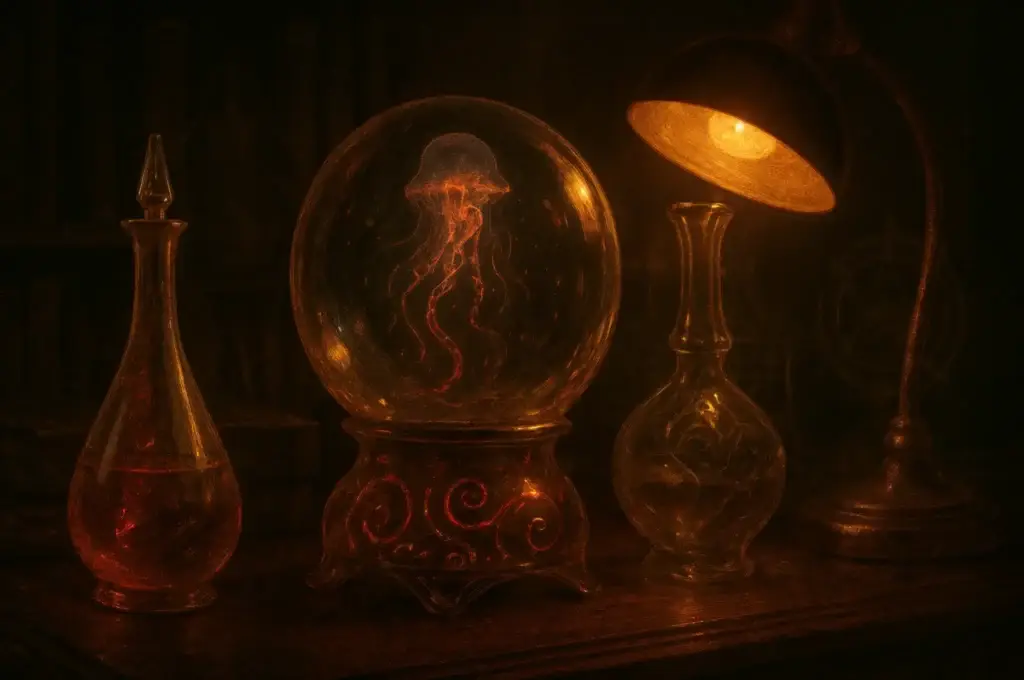
Jenna Glass on her regrets: ‘I regret the Wights I didn’t save. But the people I’ve kept from losing themselves entirely—that keeps me going’ (Credit: Kenomitian)
Closing Summary
The debate over epimorphism and rewriting in Kenoma is not about whether the practices work—they do—but whether they should be done at all, and under what constraints. In Jenna Glass’s view, these psychomantic interventions are tools, neither inherently benevolent nor malevolent. Their moral weight rests entirely on the intent and care of the practitioner. As Los and the wider Oothoonian Union grapple with the boundaries of personhood, the voices of those rewritten—and of the ghosts they leave behind—will shape the laws and ethics of generations to come.
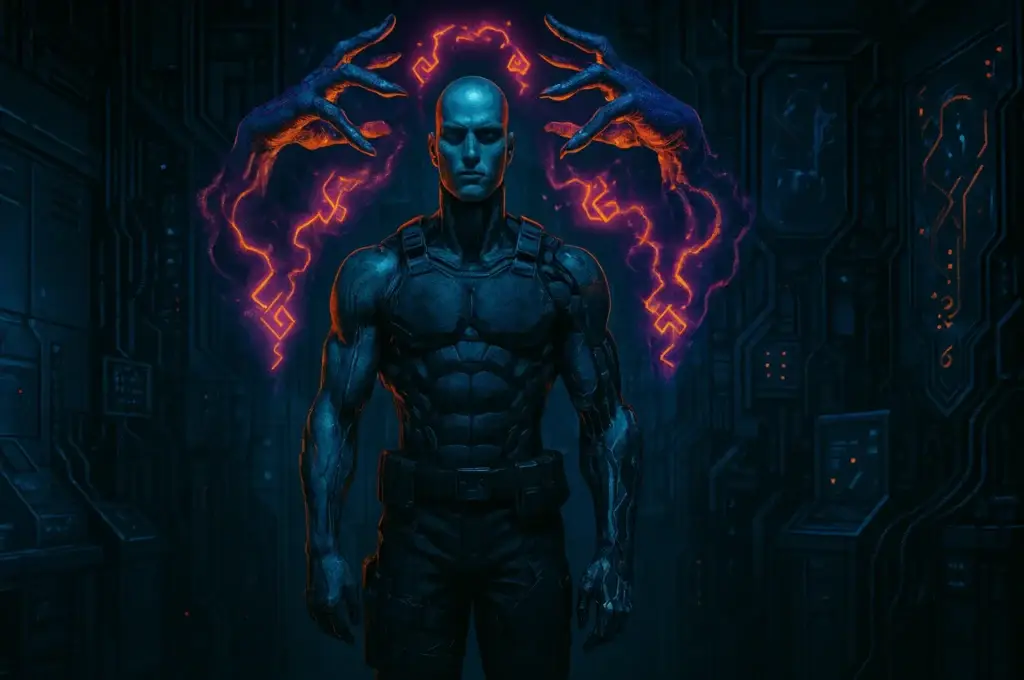
A representation of Epimorphism on the “Everyman” (Credit: Kenomitian)
Notes extracted from the Kenomitian Compendium
[1] Oothoonian Union: a Decopunk dystopia organized like a pyramid scheme with an absolute monarch, the Eupraxus, at the top; who is assisted by the Perfecti: individuals, organizations and lineages who enjoy absolute immunity as long as they enforce the inscrutable edicts penned by their patron from the capital city of Los. It came about after the unification of the Metis Federation (an exclusionary and Steampunk democracy), the Holy Kingdom of Zagreus (a Raygun Gothic theocracy) and the Eunation of Phanes (the Decopunk homeland of the Eupraxus monarchy), the Asterope Territories (Oothoon’s Steelpunk extra-dimensional colonies) and the Domination of Sideris (Oothoon’s Atompunk extra-planetary colonies).
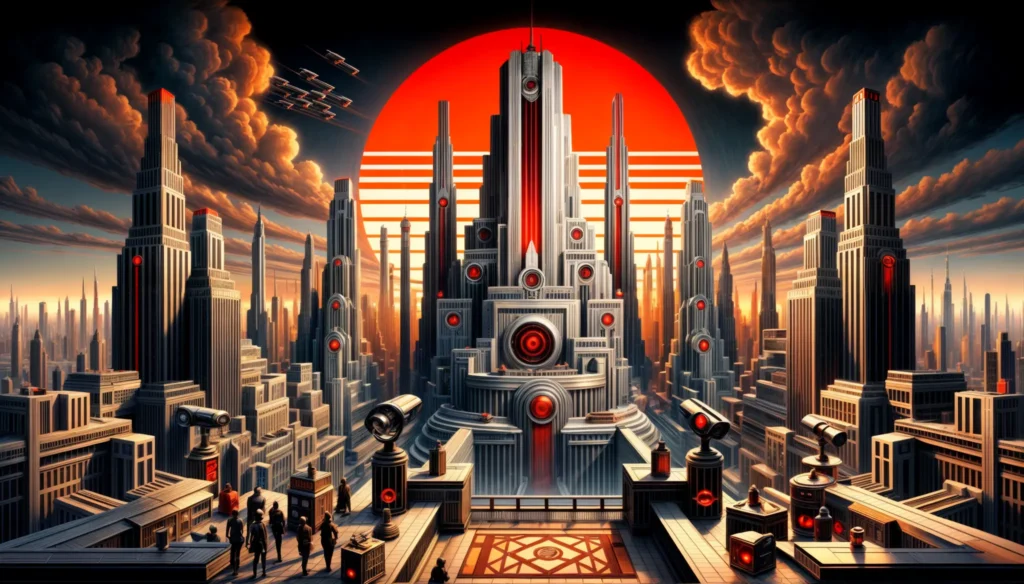
A glimpse into the Oothoonian Union (Credit: Kenomitian). See more
[2] Wights: The lich-like “ghosts” of every mind an epimorph has ever had, always caused by a necromancer. They appear as elioud mummies (or as “hive minds” of many bodies in cases of multiple epimorphisms), surrounded by crimson and caressing clouds that resemble the Psychomancers that crafted them. Can remain in Yesh even after the original has been exorcised; and are doomed to oblivion instead of an afterlife, or an eternity in Kalyptos should their owner/creator die during a Pandemonium.
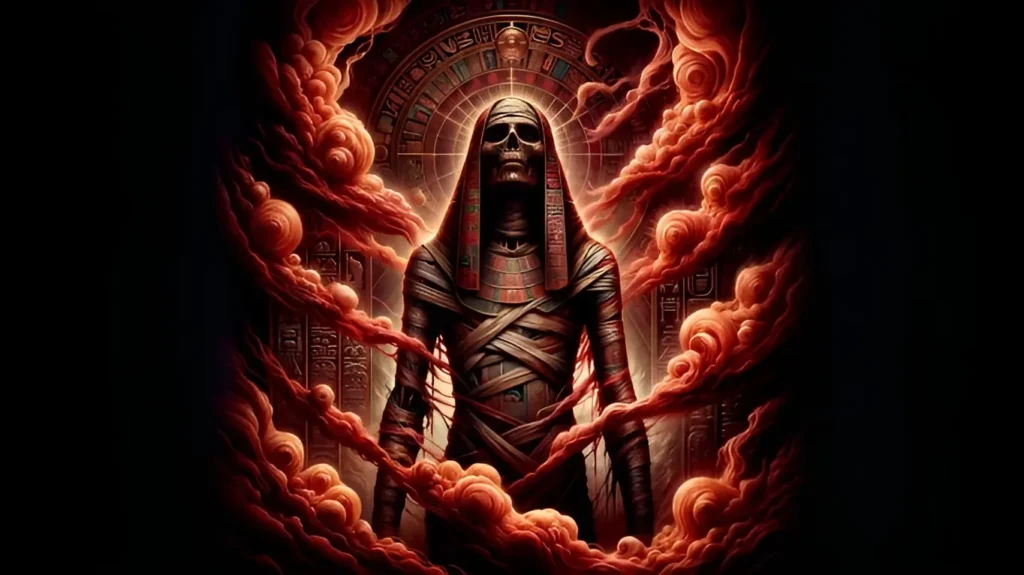
Whights (Credit: Kenomitian)
[3] Ghasts: The lich-like “ghosts” of homunculi, golems and familiars, always caused by a necromancer. They appear as floating and translucent cnidarians, sadistically wrapped in red chains dripping with blood. Their “power level” can be modified with Mana as with any other spell; and are doomed to oblivion instead of an afterlife, or an eternity in Abezethibou should their owner/creator die during a Pandemonium. Once their original creator is in Tohu, they require Orgone to exist.
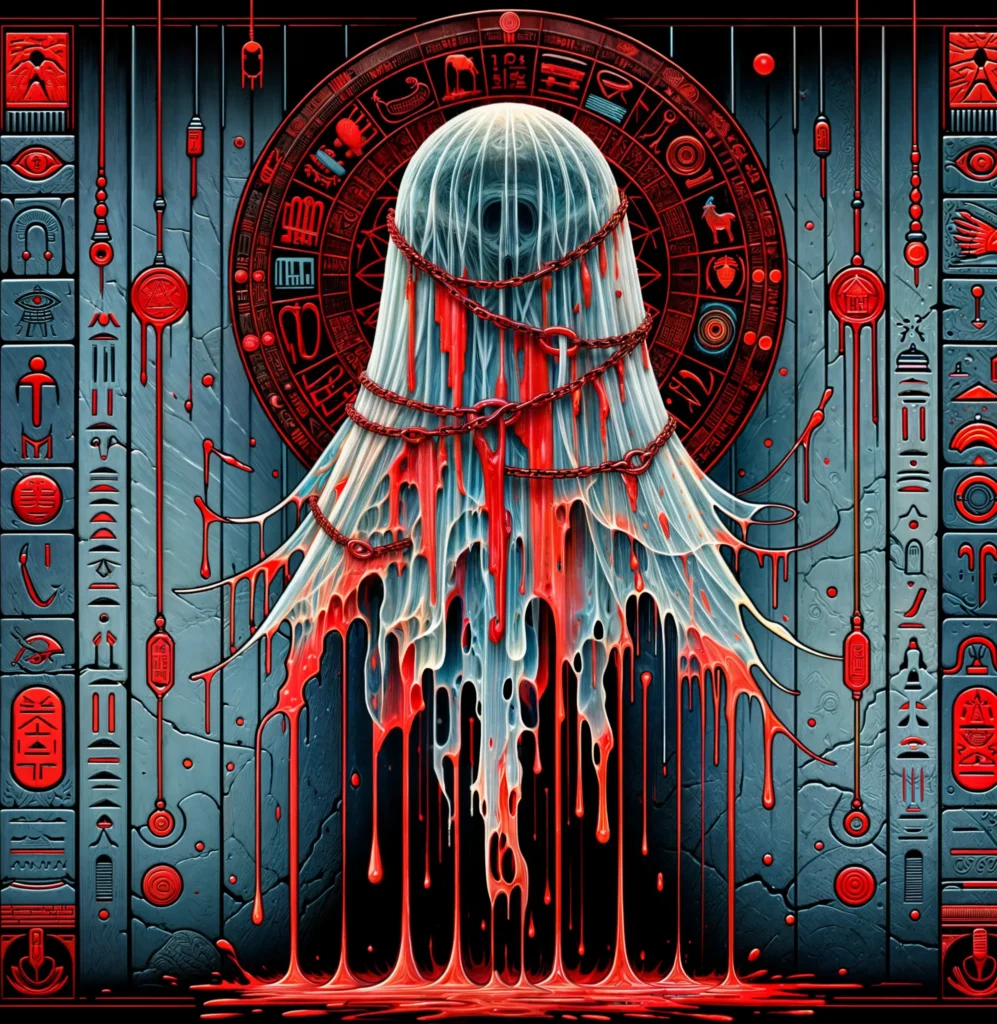
Ghasts (Credit: Kenomitian)