Sandalfón 30, 1790 — As industrial hunger for rare biominerals accelerates across Kenoma, miners and corporations turn to Fiends and Giants as living ore, threatening ecological balance and spiritual integrity. In the Abyss of Saklas, voices from both industry and conservation warn of a looming crisis.
Context
In Kenoma’s layered cosmos, every substance is infused with both material and spiritual consequence. The extraction of metals has always carried risk, but the latest practice — harvesting unique biominerals secreted by Fiends and exploiting the corpses of Giants, or Ylidheem, as raw material for celestial bodies — has raised profound questions about sustainability and sanctity.
Joseph Lagusa, an Atlantean geologist, helped this investigation penetrate the otherwise secretive networks of hunters, miners, and alchemists who sustain this trade. His guidance led to the Abyss of Saklas, where Atlantis’ dominion enables large-scale extraction of resources from Fiends’ bodies and Giants’ remains.
Beyond the written words, the story unfolds:
Development of the Facts: Harvesting the Fiends
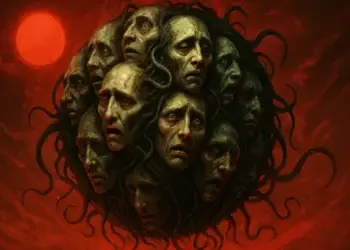
- Fiends are vril-born monstrosities descended from Titanic bloodlines, inhabiting many planes of Kenoma. They are not inert sources of ore but living, predatory beings, each secreting metals of staggering potency.
- Gnoph-keh secrete yliaster, a purple tungsten-like metal prized for charisma-enhancing charms.
- Bholes yield lunargent, a blue osmium-like metal valued for dampening spellcraft.
- Shantaks exhale mithril, a white lithium-like substance suppressing charisma and enthralling aura-users.
- Gnorri burn vril into waves, leaving hermium, an orange rhodium-like conductor.
- Urhags trample vril into crystals, producing siderite, a pink metal that glows with light.
- Byakhee carve vril hollows, generating adamantite, a cyan ruthenium-like ore that devours heat.
- Shoggoths liquefy vril to excrete kassiterum, a green chromium-like sound absorber.
- Zoog’r magnetize vril, birthing orichalcum, a yellow platinum-like enhancer of spells.
- Nug-Soth phase vril through od, secreting brontium, a red iridium-like blood-drinker.
- Gûghs spark vril into flame, leaving ichor, a black palladium-like absorber of light.
- Gyaa-yothn, colossal and invisible in Caligine, alone secrete batrachite, an antigravitational metal likened to tellurium, vanishing into alien light outside their home realm.
Each of these metals fetches astronomical prices. Hunters risk their lives in abyssal caverns, airless voids, or raging maelstroms to cut samples from Fiends still writhing.
A miner named Talith Dras, face scarred from a Byakhee strike, spoke candidly:
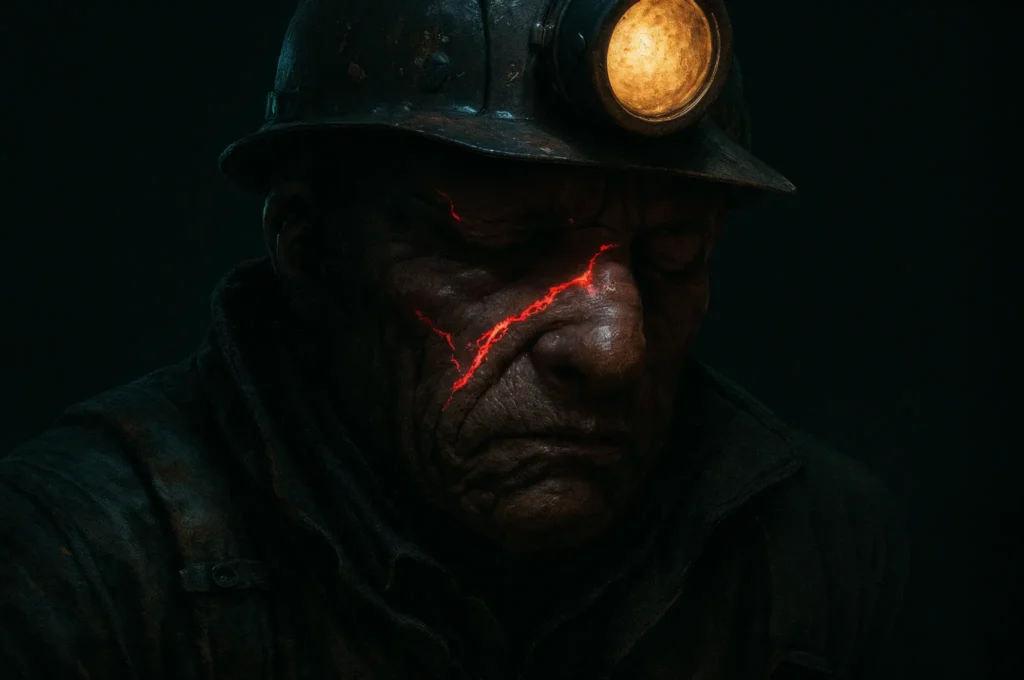
The face of Talith Dras, scarred from a Byakhee strike, is a testament to the risks of “mining nightmares.” (Credit: Kenomitian)
“We don’t mine rock — we mine nightmares. The corporations pay in fortunes, but most of us won’t live to spend it. Still, how else do you feed a family when orichalcum sells for more than gold?”
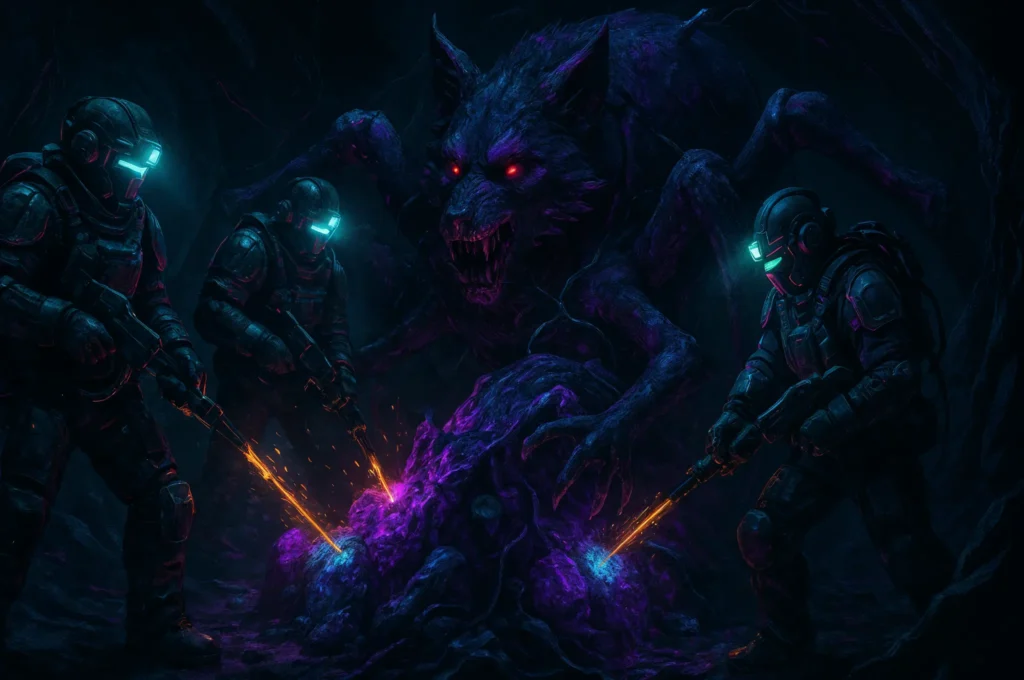
Miners risk their lives to harvest biominerals from living Fiends, calling it “mining nightmares” (Credit: Kenomitian)
The Giants and the Ylidheem
If Fiend-harvesting is perilous, the exploitation of Giants is no less unsettling. Giants are protean entities of Archontian descent, colossal and mindless, drifting through the Augoeides. Their translucent “rock-skin,” crystalline bones, and shadow-tentacled forms dissolve upon contact with Raqia, the cosmic firmament, leaving behind their corpses — the Ylidheem.
Over aeons, Ylidheem have coalesced into dwarf planets, moons, asteroids, and comets. These cadavers of creation form the raw substrate of the heavens. Yet industries now strip their remains for ceraunia — meteoric iron and “moon rocks” prized not just for metallurgy but for their unique ability to neutralize fiendish metals.
Lagusa, the Atlantean geologist, described the paradox:
“The Ylidheem are already corpses, true. But in consuming them, we reshape the balance of the cosmos itself. These bones are not inert — they are anchors. Dismantle too many, and we risk unraveling the fabric of the spheres.”
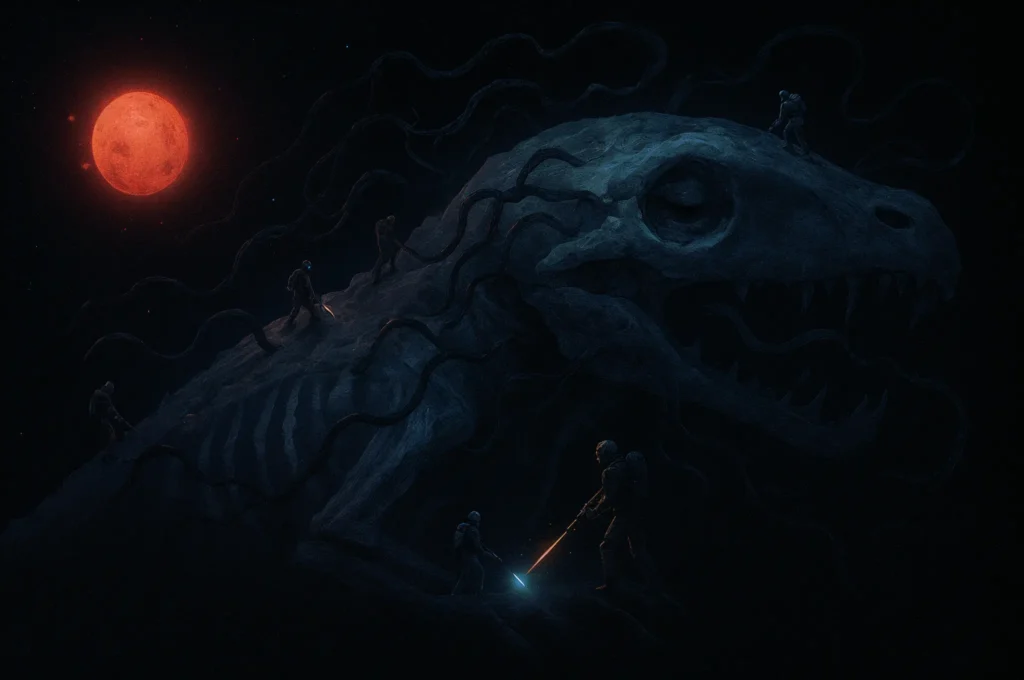
The cadavers of creation, the Ylidheem, are stripped for meteoric iron and “moon rocks,” raising questions about the very fabric of the cosmos (Credit: Kenomitian)
Market Demand and Industrial Hunger
The Abyss of Saklas has become a hub for the trade, with Atlantean guilds coordinating hunts and expeditions. Market records reveal staggering prices:
- Orichalcum: 700,000 ACAR per ingot.
- Adamantite: 400,000 ACAR.
- Yliaster: 350,000 ACAR.
- Ichor: 250,000 ACAR.
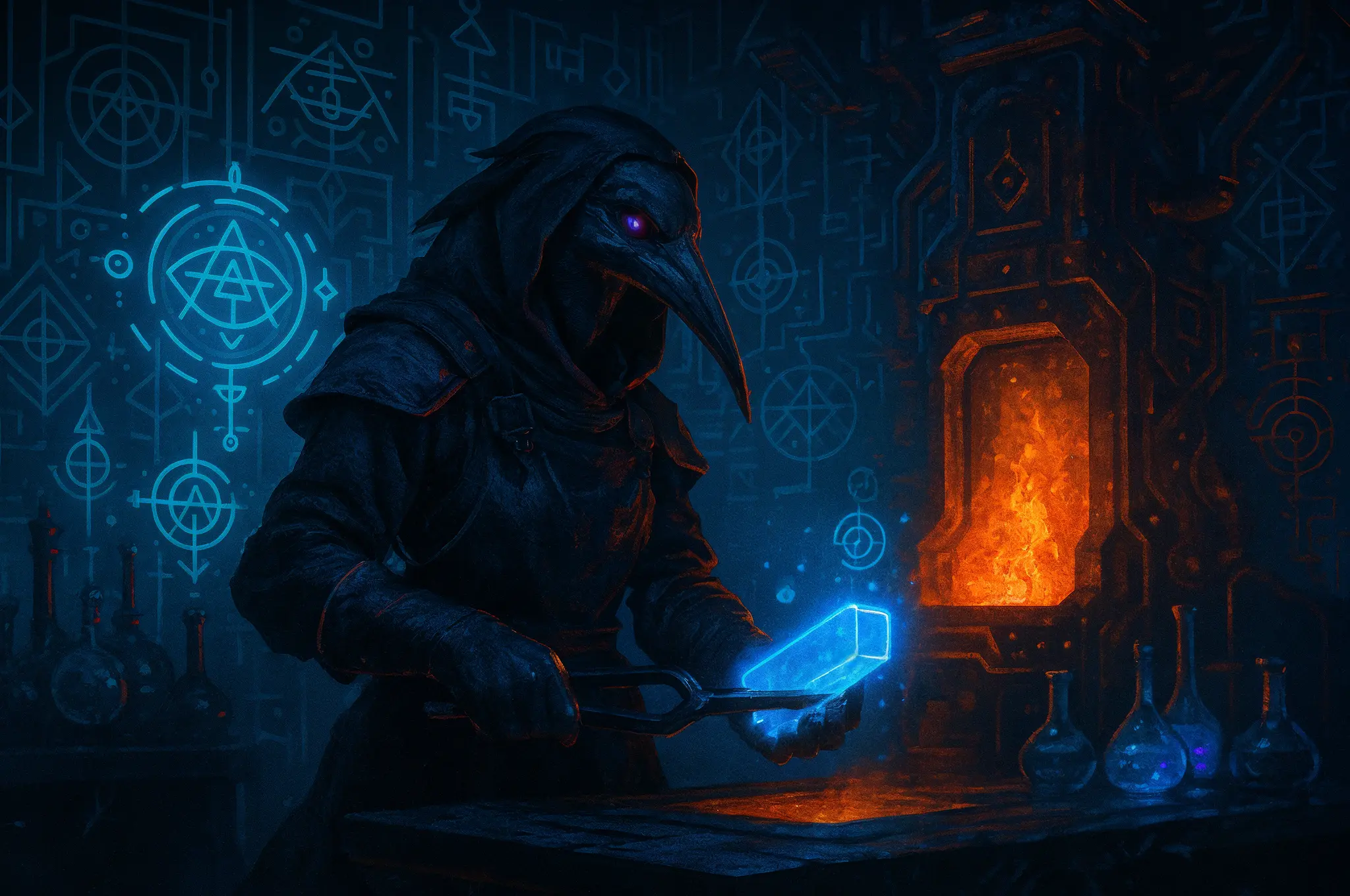
Alchemists claim these metals are irreplaceable for spellcraft, energy manipulation, and construction of magi-tech. “A spell-dampening lunargent alloy can turn the tide of a war,” admitted Cethra Anavo, a Thelemic magi-smith.
But the hunger has sparked controversy. Extraction quotas expand yearly, and rumors persist of corporate-backed militias illegally poaching Fiends in restricted dominions.
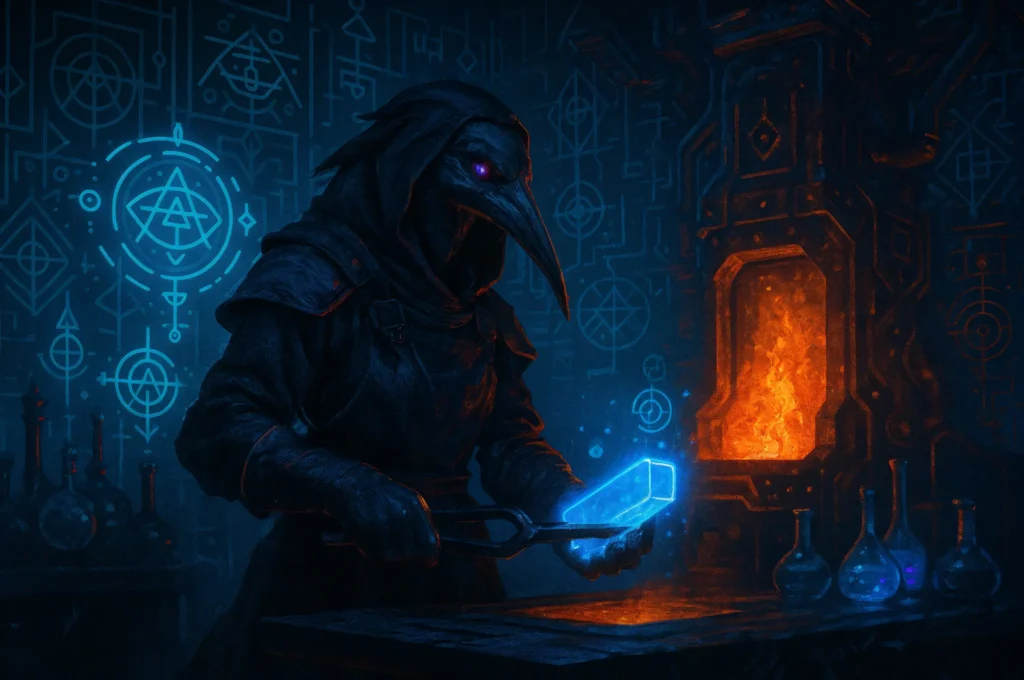
A magi-smith admits that a “spell-dampening lunargent alloy can turn the tide of a war.” (Credit: Kenomitian)
Animist Warnings
Not everyone sees profit. Animist scholars and environmental mystics warn that the harvesting does more than kill creatures — it sickens the very land.
Yashir of the Verdant Communion, a scholar-priest of animist theology, explained:
“Fiends are not merely monsters — they are functions of vril. Remove them, bleed them, and you distort the odic cycle. The ground wilts, rivers dry, dreams sour. Ecological entropy is not metaphor here — the cosmos itself falls barren.”
Indeed, regions of the Abyss once lush with vril resonance now stand dim, stripped of their vibrancy. Hunters whisper of “ghost landscapes,” where even echoes and shadows have fled.
Ethical and Spiritual Dimensions
The practice strikes deeper than ecology. In Kenoma’s cosmology, every being’s essence contributes to balance. By treating Fiends as commodities and Giants as ore, society may be desecrating not only nature but sacred architecture.
Lagusa argued that Atlantean corporate policies frame extraction as “salvage” rather than “destruction,” but the distinction rings hollow for conservationists.
One alchemist, requesting anonymity, confessed:
“We’ve forged weapons from ichor that devour light itself. We’ve lined palaces with orichalcum to magnify spells. But sometimes I wonder: are we building civilization, or are we dismantling creation?”

“We’ve forged weapons from ichor that devour light itself… But sometimes I wonder: are we building civilization, or are we dismantling creation?” (Credit: Kenomitian)
Consequences and Next Steps: Rising Tensions
Clashes are already erupting. In Saklas, miners’ guilds and animist protesters confronted one another outside the Atlantean Exchange Hall, where ingots of lunargent and mithril were traded. Violence was narrowly averted. In Cyranides, reformist magistrates proposed a moratorium on Fiend-hunting, citing spiritual degradation. Corporations threatened embargoes in response.
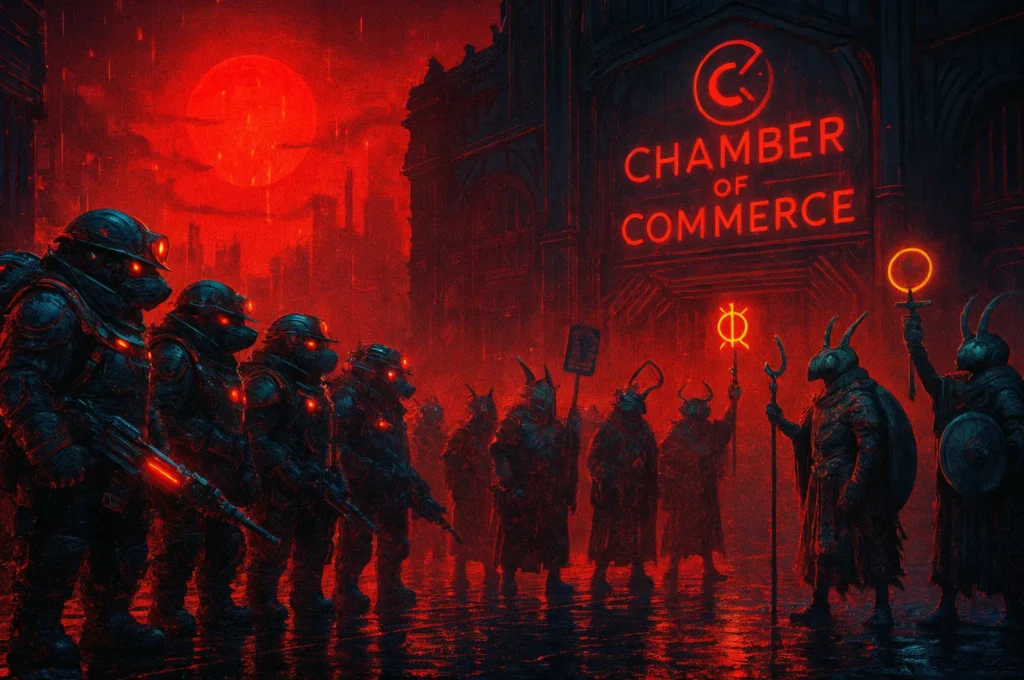
Clashes erupt in Saklas as miners’ guilds and animist protesters confront each other outside the Atlantean Exchange Hall, where fiendish metals are traded (Credit: Kenomitian)
Spiritual Crisis
The extraction fuels not only political but theological unease. If Fiends embody vril’s processes and Giants anchor the Augoeides, then their consumption is not resource gathering — it is desecration. Animists warn that every ingot extracted leaves a scar that echoes through both Yesh and Tohu.
Closing Subheading: A Choice Between Prosperity and Preservation
Kenoma now faces a crossroads. The wealth from Fiend and Giant harvesting fuels cities, corporations, and even states. But the costs — barren lands, spiritual entropy, and possible destabilization of the spheres — grow impossible to ignore.
As Joseph Lagusa concluded in his interview:
“Atlantis has always believed the cosmos exists to be mastered. Yet here, perhaps, is a lesson that some treasures should remain untaken — not because they are unreachable, but because they are indispensable.”
The fate of Fiends, Giants, and the very integrity of Kenoma’s worlds may hinge on whether exploitation yields to restraint — or whether the hunger for metals burns hotter than the cosmos can endure.