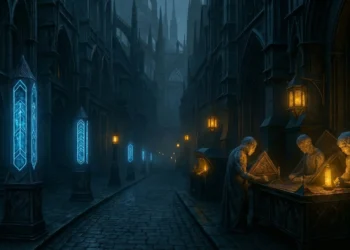
Sandalphon 2, 1790 — In Miyako, the ancient capital of the Gaotu Empire [1], five distinct orders of mystics, theologians, and occult scholars gathered for a historic interfaith conference. The event, hailed as “The Obsidian Anvil,” sought to confront the perennial divide between Magic and Charismata, drawing together traditions long separated by dogma, governance, and metaphysical orientation.
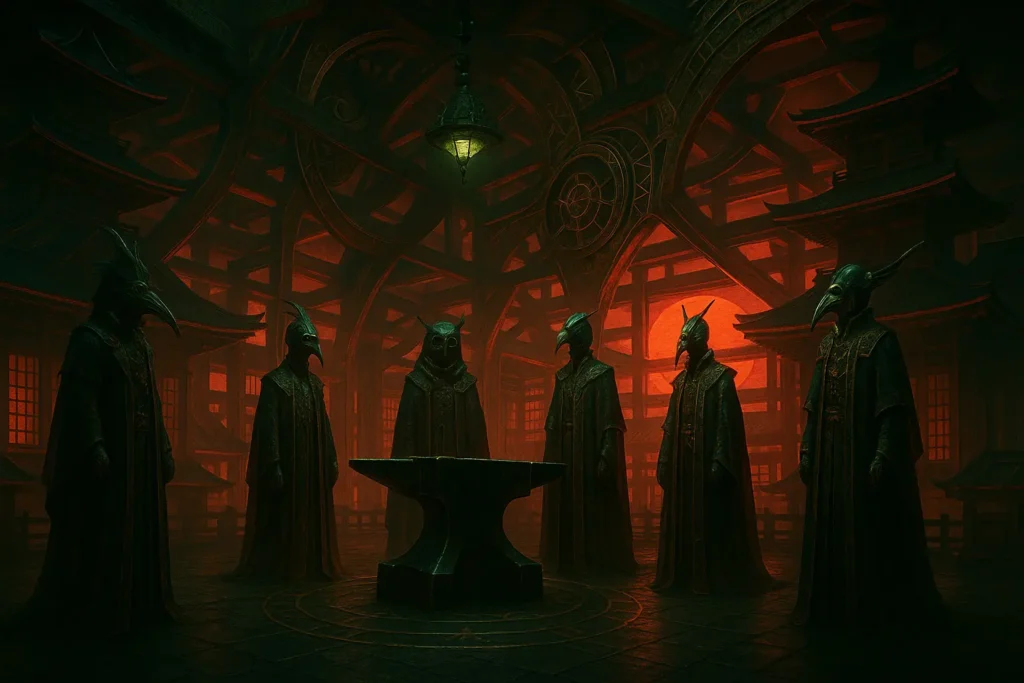
The historic “Obsidian Anvil” conference begins in Miyako, bringing five disparate orders of mystics and theologians together to forge a unified path for Magic and Charismata under the watchful eye of the Gaotu Empire (Credit: Kenomitian)
Miyako, the Pontifical Headquarters of Kannagara-no-michi and symbolic center of Bokrug worship, has long been both shrine and laboratory for arcane thought. Hosting this convergence placed the Gaotu Empire at the nexus of theological inquiry and arcane responsibility, reaffirming its position as a custodian of both technological and spiritual advancement.
The conference was framed as essential to the “spiritual health” of the empire, a nation whose constitution binds citizens not only through law but through metaphysical accountability. By convening diverse groups—demon slayers, mystics, necromancers, theologians, and academicians—the gathering underscored the urgent need to codify the coexistence of therian will (Magic) and Supernal gift (Charismata).
The Gaotu Empire is renowned for its unique governance: nobles, priests, military officers, and property owners vote in the open. Within this carefully managed balance, the legal status of supernatural practice is equally codified. Mages are ranked according to the Pardes system, ranging from the novice Peshat to the transcendent Partzufim, with strict requirements for registration and monitoring. Nephilim, born vessels of Charismata, live under additional regulation, their powers both treasured and feared.
It is against this backdrop of structured control that the conference unfolded. Organizers described the meeting as a “forging,” where the raw ore of tradition and innovation would be hammered together under the Empire’s watchful eye to shape a durable arcane future.
Orders in Attendance: The Pillars of the Anvil
The conference convened five organizations, each bringing distinct perspectives.
The Zuijin, warrior priests steeped in samurai traditions, have long pursued the eradication of demonic forces. Their approach fused Kinetomancy—the manipulation of motion—with blessings that sharpened their blades against Diabolic entities.
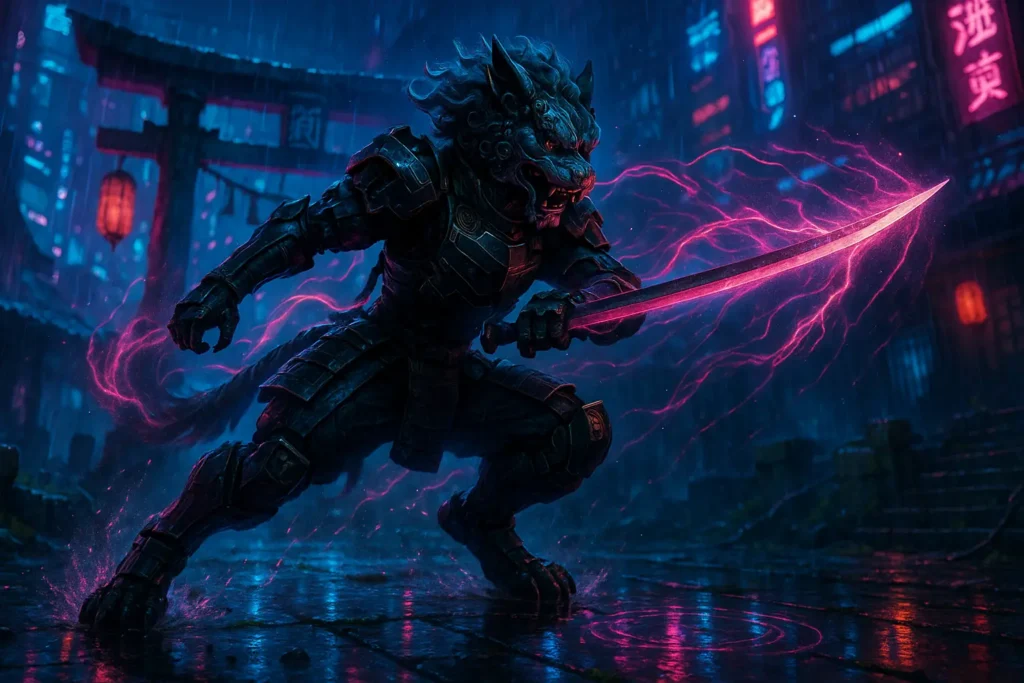
The warrior priests of the Zuijin demonstrate the fusion of Kinetomancy with their samurai traditions, a disciplined power indispensable for their battles against the predatory Daityas (Credit: Kenomitian)
The Ōnyūdō, a Kaeerist sect of mystics, embraced transhumanism through Tsathogguan philosophy, finding sacred resonance in the imagery of invertebrates descended from Yig’s blood. They embodied a synthesis of meditation, martial discipline, and cyber-transcendentalist theology.
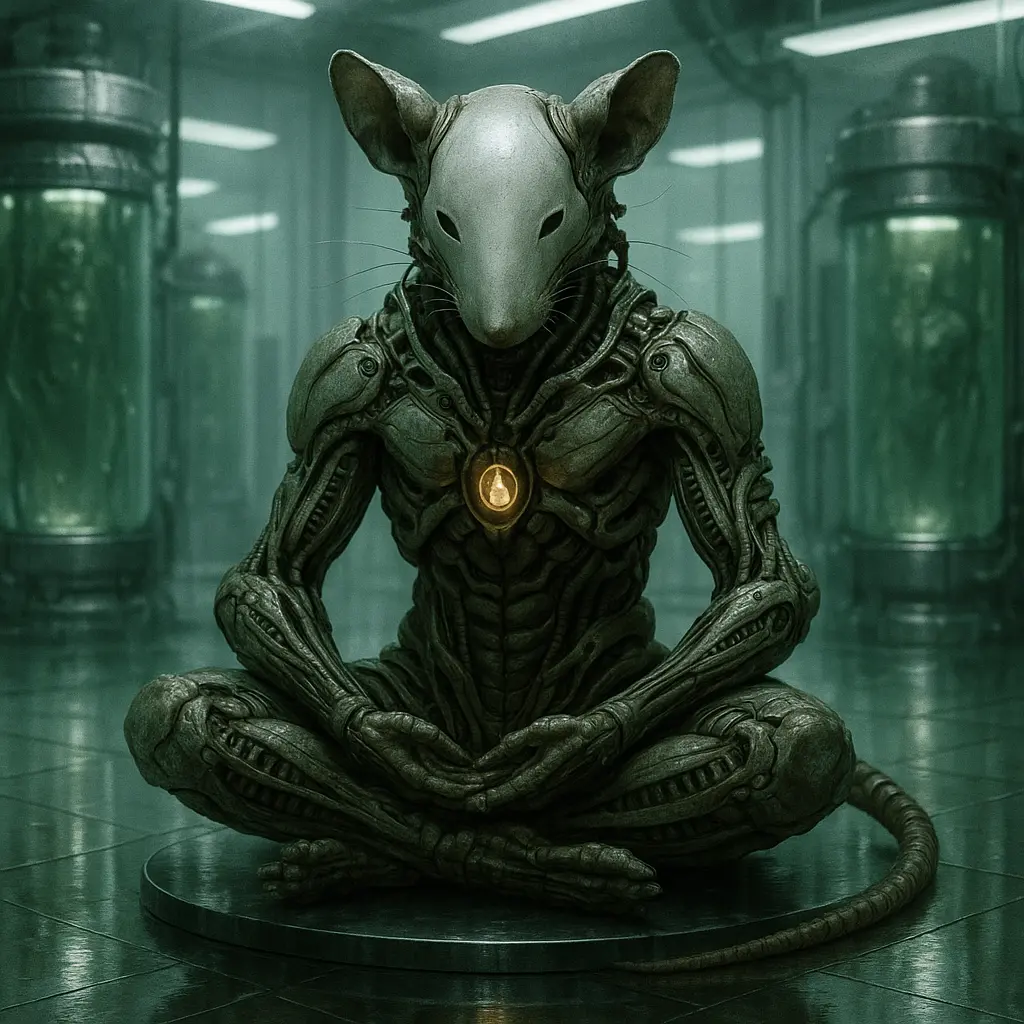
The Ōnyūdō mystics, following a cyber-transcendentalist theology, present their view on transcending the mortal form—an act of piety that fuses the divine heritage of Yig with high-tech machinery (Credit: Kenomitian)
The Kudan Fellowship arrived as theologians of Onmyōdō, advocates for the nation’s metaphysical health. Their methods integrated Correspondence, Telegnosis, and Logomancy to monitor and recalibrate spiritual well-being, always with the blessings of Bokrug guiding their auguries.
The Kotobuki Academy, a network of occult institutions, lent academic gravitas. Their research bridged thaumaturgy with technomagic, binding together traditional ritual, technological innovation, and the ethical frameworks enshrined in Gaotu’s international treaties.
Finally, the Sōjōbō, ascetic necromancers devoted to sokushinbutsu, represented the most austere voice in the debate. Their practices touched the threshold of death itself, turning bodily sacrifice into fuel for deeper understanding of soul and spirit.
Debates at the Conference. Magic and Charismata: Divergent Paths
Central to the discussions was the distinction between Magic, born of mana and the disciplined manipulation of the soul’s aether, and Charismata, divine gifts rooted in Prosopon, the grace of Titans, Deities, or Devils. While Magic obeys rigorous hierarchies of learning and achievement, Charismata interrupts reality with raw miracle.
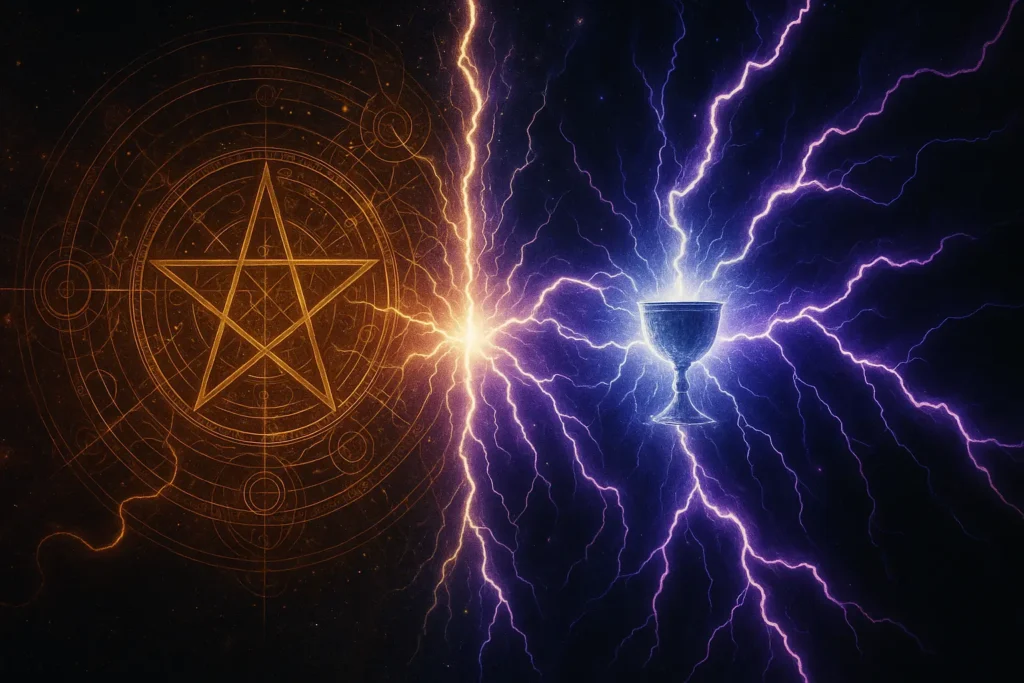
The core debate: the disciplined, hierarchical flow of Magic (mana and aether) clashing with the raw, miracle-interrupting power of Charismata (divine gifts from Titans, Deities, or Devils) (Credit: Kenomitian)
The Zuijin emphasized Charismata as indispensable for their battles against the Daityas, while the Kotobuki Academy argued for a systematic framework to integrate Charismata into magical curricula. The Sōjōbō, by contrast, questioned whether divine fiat could ever truly be regulated, warning that excessive reliance on Charismata risked spiritual dependency.
Religious Authority and National Health
The Kudan Fellowship advanced a thesis that Magic and Charismata together constituted a diagnostic system for the nation’s well-being. Onmyōdō, empowered by divine blessing, could forecast crises and redirect communal energies. “Our work,” one Fellowship theologian said, “is preventative medicine for the soul of Gaotu.”
The Ōnyūdō pressed a different concern: the body as vessel. For them, transcending mortal form through invertebrate symbolism and cybernetic practice was an act of piety, one that blurred the lines between the divine heritage of Yig and the enlightened domain of Tsathoggua.
Reverence and Tension: Ethical Frontiers in Necromancy and Technology
Necromancy was a lightning rod throughout the proceedings. The Sōjōbō insisted that the perception of souls and the rite of self-mummification were vital contributions to understanding mortality’s role in magic. Kotobuki scholars pressed them on legality, noting Gaotu’s strict prohibition of zombification. In reply, the necromancers emphasized exorcism and soul study, insisting their practices offered balance rather than violation.
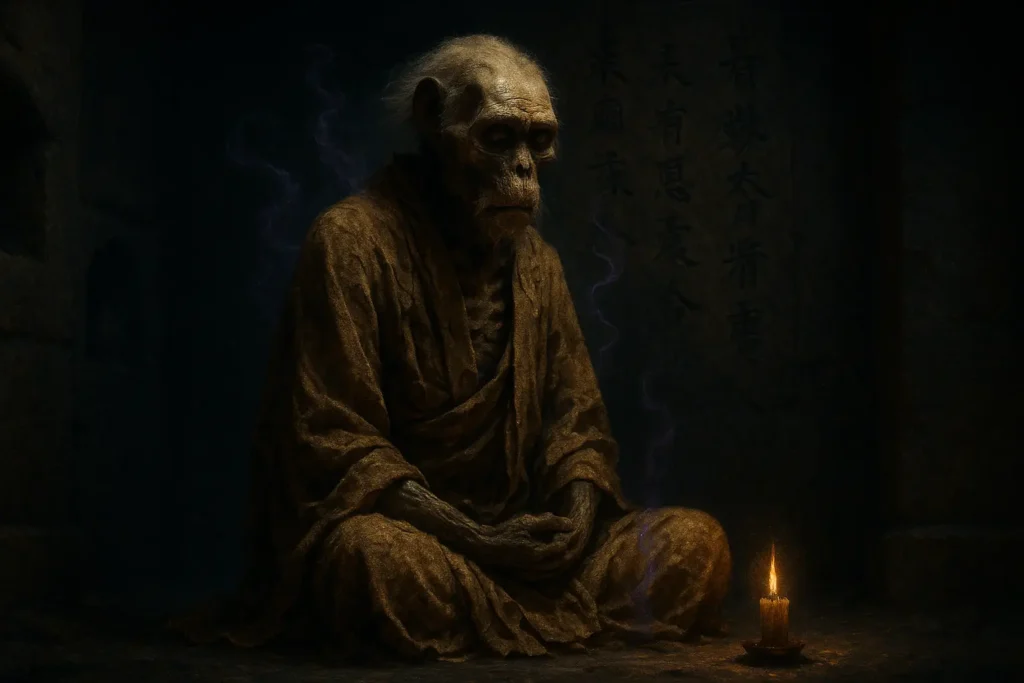
Representing the most austere voice, the Sōjōbō insist that the extreme rite of sokushinbutsu—self-mummification—is vital to understanding mortality’s role in the pursuit of arcane truth (Credit: Kenomitian)
Technology also provoked debate. Cybermancers and numinologists—those who pilot catalyst-charged mechs—already embody synthesis of the arcane and mechanical. Yet questions lingered about whether such practices dilute or deepen spiritual traditions. The Kotobuki Academy argued for codified ethics in techno-magic, echoing the Chazaqiel Conventions on Automata Rights.
Towards a Shared Doctrine
Though differences remained, the conference achieved consensus on the need for continued cooperation. Draft proposals suggested frameworks for shared ritual, academic exchange, and mutual regulation across orders. A joint declaration reaffirmed adherence to the Zephon Declaration of Magical and Charismatic Responsibility, placing Gaotu’s efforts firmly within global ethical norms.
Consequences and Next Steps
The Obsidian Anvil did not resolve every tension, nor could it. Yet its significance lay in forging a language through which disparate traditions might speak to one another. The Zuijin’s steel met the Ōnyūdō’s contemplation; the Kudan Fellowship’s auguries met Kotobuki’s laboratories; the Sōjōbō’s silence met the hum of cybernetic innovation.
As Miyako’s zinc torii gates reflected the autumn sun, delegates departed with the weight of unfinished labor but also with conviction. The Gaotu Empire, through both law and faith, signaled its commitment to an integrated future where Magic and Charismata would not merely coexist but actively reinforce one another.
For Kenoma, the implications are profound. Should Gaotu succeed, the Obsidian Anvil will be remembered not only as a conference but as the crucible where the future of spiritual governance was first hammered into shape.
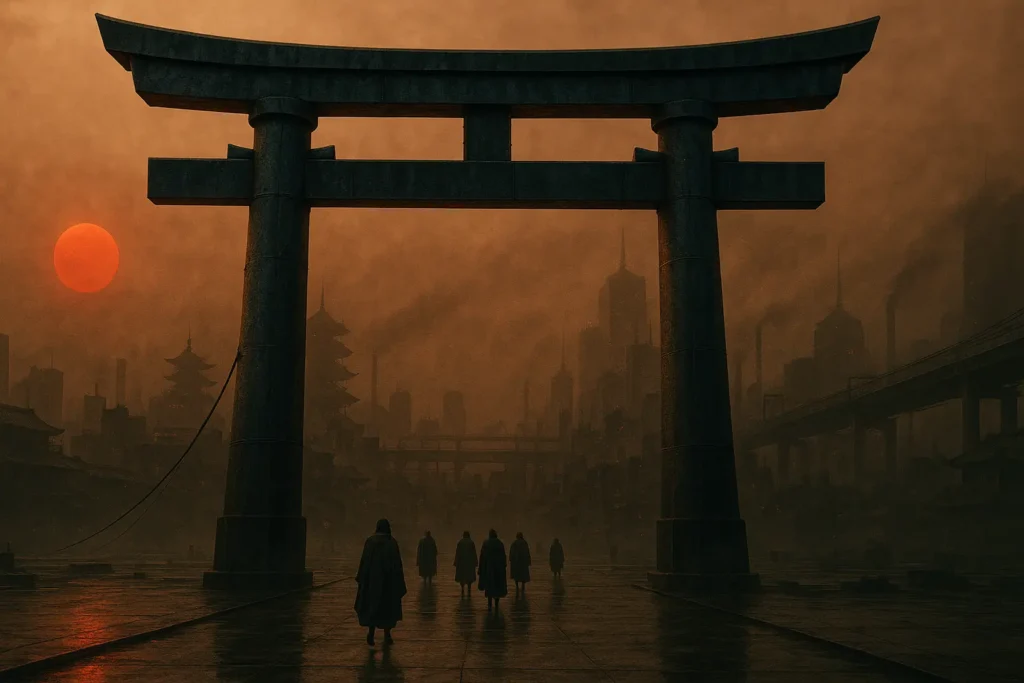
Under the shadow of Miyako’s zinc torii gates, delegates depart with the weight of unfinished labor, knowing the Obsidian Anvil has become the crucible for Kenoma’s spiritual governance (Credit: Kenomitian)
Notes extracted from the Kenomitian Compendium
[1] The Gaotu Empire is a post‑cyberpunk, East‑Asian‑inflected dystopia—limited‑franchise “democracy” covertly run by myriad secret societies; political‑economic system: capitalism, aesthetics from Asian sci‑fi/otaku/mythic motifs. Official language: Wago (Japanese) in Waga script; capital Edo (Toyo, Japan); extensive extra‑planetary and extra‑dimensional colonies. Pardes laws: Peshat/ Remez/ Derash are ordinary citizens; Sod need trackable microchip licenses to cast in public; Partzufim are microchipped—half well‑paid conscripts into military/ scientific/ state/ LE/ black‑ops, half secretly kidnapped and auctioned; Nephilim & Emmakha treated as Partzufim. Rights & bans: automata vary; cryptids/monsters have animal rights; homunculi/golems/familiars treated as children under mage guardianship; epimorphism illegal; mundane AIs are owner property; uplifted/parasapient tlavati treated as wards; necromancy on elioud—zombification illegal, ghost‑binding legal, ghost‑creation illegal; psychomancy/telegnosis on elioud mostly illegal (recording/empathy allowed). Slavery abolished; megacorporate extraterritoriality recognized (Hadit, Aiwass, Hurtaly, Pantagruel, Abramelin, Asbeel, YEQON); hot war vs. Abbā də Rabbūṯā; Economic-Military Ranking: 4; symbols—flag: crimson kiji on white; imperial seal: yellow/orange cherry blossom; anthem “Song of the Cherry Blossom.”
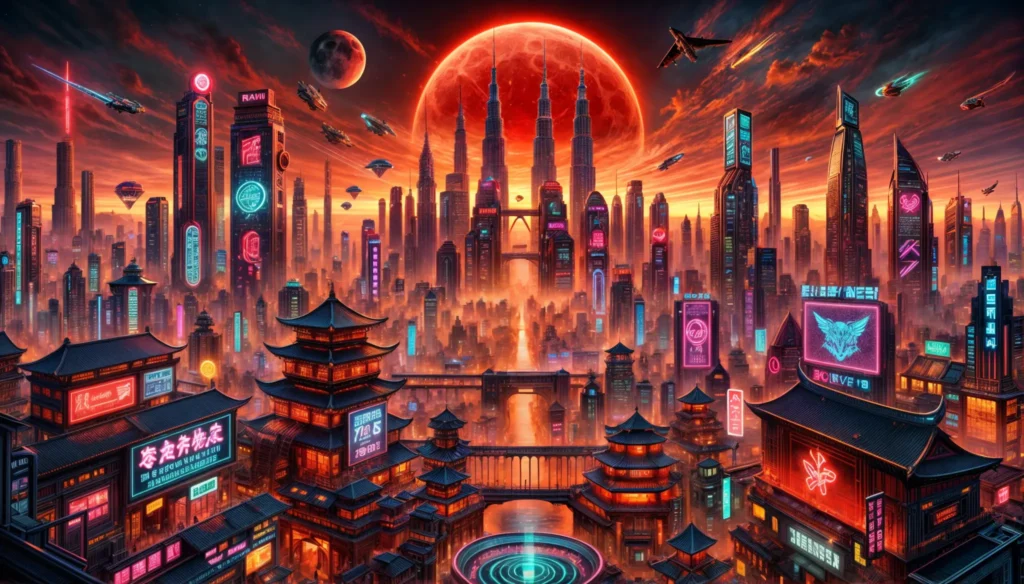
A glimpse into the Gaotu Empire (Credit: Kenomitian). See more